
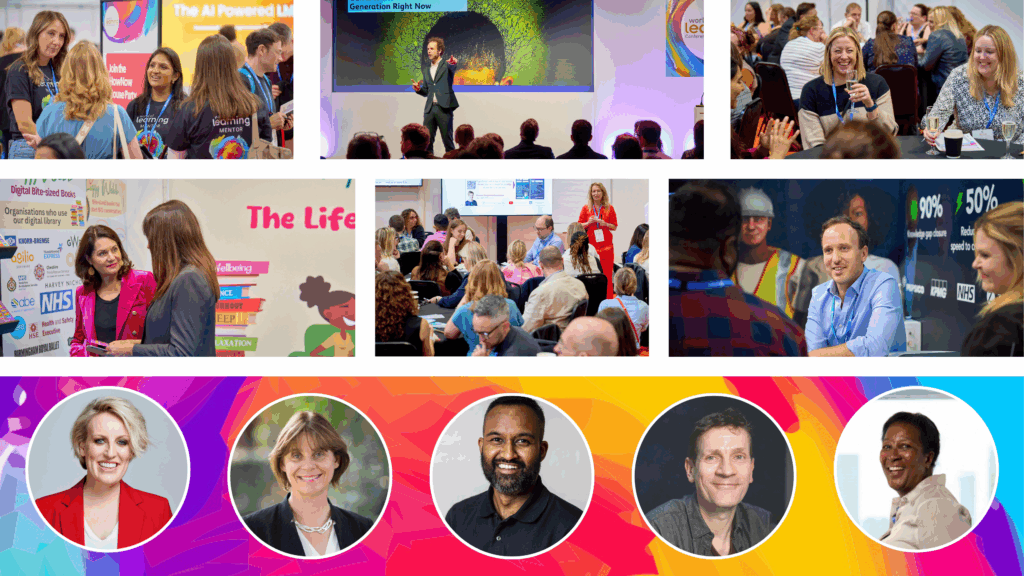
This year’s World of Learning Summit – which took place at Olympia, London, on 3-4 February – had its usual focus on what the L&D community can learn from each other. But, as ever, other themes emerged over the two days – some expected and some more surprising! Here are a few of my reflections and highlights from the event.
AI and work ecosystems
The word ‘ecosystem’ appeared in several sessions. Now, some of us (me included) may be currently stifling an eye roll. Ecosystem could just be a zeitgeist-y nonsense word and – goodness knows – we’ve had a few of those in L&D.
But, bear with me, as its usage is definitely related to two tangible concepts.
First, there was mention of a ‘work ecosystem’ in which individuals work alongside and direct AI tools to take on specific tasks within their area of responsibility. What’s more, as AI develops, more people will experiment with and build their own tools to complete tasks that make space for exploring more interesting and valuable parts of their role (where AI adds little or no value).
Second, learning will be an integral component of the work ecosystem. The L&D profession has talked for some time about ‘learning in the flow of work’, personalised learning at the point of need and performance support. But this ecosystem idea both encompassed and went beyond those ‘workflow’ discussions. It’s about leaders modelling continuous development, learning tools embedded into the systems people use, and L&D teams focusing on the real experiences and challenges of employees by working alongside them.
Simon Gibson, Talent Director of Center Parcs, put it best when he said: “You can’t help the people who clean chalets to build their skills until you’ve spent some time cleaning chalets!”
Getting closer to business culture
In his keynote address on day two, workplace culture expert Bruce Daisley also shared a powerful message about being close to the reality of the business. The former Head of Twitter UK and YouTube in Europe de-mystified culture, taking it from a trendy buzzword to something tangible that leaders shouldn’t leave to form accidentally.
Daisley’s model – which owed much to the seminal work by Edgar Schein – was that behaviours can be directed, encouraged and facilitated. And what people do and are equipped to do at work exemplifies organisational values and builds organisational culture. In short, real activities, in real situations, can be encouraged (or discouraged).
It is clear (I hope) that L&D has a significant role here. As Daisley said in relation to AI: “Intelligence on tap will rewire business. If all organisations are asking questions of the same AI, then the remaining competitive difference is culture.”
Daisley was also clear that people needed to feel that they ‘mattered’ within the organisation. This sense of ‘mattering’ was about an individual’s significance within the ecosystem. Again, it starts with behaviours – by leaders, by colleagues, by collaborators. Noticing contributions, asking for opinions and inputs.
It reminded me of The One Minute Manager by Ken Blanchard and its seminal instruction to team leaders to “catch someone doing something right.”
L&D’s role in an ageing ecosystem
This sense of being part of something bigger than us – than the L&D team and our own corner of the world – reflected the tone brilliantly set by the opening keynote.
Professor Sarah Harper CBE, Director of the Oxford Institute of Population Ageing, seemed an unlikely choice for a conference of learning and development professionals. But as she spoke, expressions changed from slight confusion to rapt attention.
Harper’s superbly researched and evidence-based presentation took the conference through the basics of demographics.
Specifically, we have fewer babies being born; we have people living longer (and doing so in good health); and buying in labour from other countries is very unlikely in the current political climate. Nor is hoovering up talent from other countries desirable if it merely relocates the global West’s demographic challenges. Only in Sub-Saharan Africa are enough children being born to replace older people in those economies, Harper explained.
What does this mean for L&D? The ecosystem we inhabit now includes a greater proportion of 50-70-year-olds. With myths persisting about older people being reluctant to use technology, Harper presented evidence that these widely held beliefs are unfounded.
So, if your workplace will have more people over 50, how will you maintain and build capability among these workers? How will you build flexible work practices that meet their needs (as they are often caring for both their parents and their grandchildren)?
And let’s not forget: unlike many of their younger colleagues, these older workers are unlikely to change jobs or seek employment elsewhere, unless forced to do so.
Beyond the sessions
This challenge Harper laid before the conference influenced many conversations I had in the queue for coffee and over lunch. And, once again, I was reminded that the real value of the World of Learning events is in that happy combination of lively inputs from the various stages and livelier conversations away from the conference rooms and seminar stages.
I have chaired both the World of Learning Summit and World of Learning Conference for over 15 years. I put on my conference suits and comfy shoes year after year for the privilege of being part of these conversations and, hopefully, stimulating discussions elsewhere.