
The five stages of Brexit
The UK’s response to Brexit mirrors the five stages of grief, with businesses positioned to succeed by building cultures of innovation centered on intelligence, collaboration, and adaptability. Leaders must employ neuroleadership and authentic communication to maintain employee engagement and trust during uncertainty.
What’s the label that works – wellbeing or productivity?

Wellbeing programmes are widespread in companies, yet many remain reactive rather than proactive, particularly in high-pressure sectors like law and banking where acknowledging stress is often stigmatized. Research suggests reframing these initiatives to focus on productivity and capacity management could prove more effective and culturally acceptable.
What do a trainer and a neuroscientist have in common?

Trainers instinctively use techniques that neuroscience now explains. A trainer’s best practices—like creating psychological safety, using simple language, and building group relatedness—align with how the brain actually learns, making training more effective.
L&D news round-up: 2 April

Stay updated with this week’s L&D news highlights, covering talent analytics, leadership styles, play-based learning, transformational change, soft skills value, and neuroscience insights from leading publications.
Learning to learn: what type of learner are you?

Discover your learning style to boost retention and engagement. This guide explains six major learning approaches—visual, aural, physical, verbal, logical, and social—with practical tips for each to help you create an optimal learning environment tailored to your strengths.
How are you using lessons from neuroscience
Discover how neuroscience insights are transforming learning and development practice. This article explores practical applications of brain science in instructional design, content delivery, and organizational change management.
Can neuroscience and behaviour mapping show the way?

Neuroscience reveals that brain structure and chemistry drive all behavior, and behavior mapping can link these insights to workplace performance. Organizations facing pressure to improve human capital performance and change employee behavior can use this scientifically-tested approach to create stronger performance cultures and better decision-making outcomes.
Five things I learned on an NLP course that changed my life

An NLP basics course taught Sally Hall five transformative principles that improved her communication and problem-solving effectiveness. Key insights include taking responsibility for how your message is received, recognizing that your beliefs may be outdated, and focusing on solutions rather than problems to enhance decision-making.
Six things you need to know about neuroscience to help develop learning
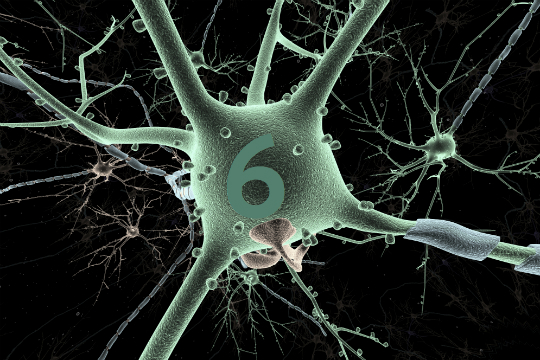
Brain plasticity enables learning throughout our lives, and neuroscience reveals how exercise, sleep, and group collaboration enhance retention and creativity. Understanding these principles helps L&D professionals design more effective training while avoiding common neuromyths.
Leading with personality pt4: Planning – is it essential or constricting?

The judging/perceiving dimension of the Myers-Briggs Type Indicator reveals how leaders relate to structure and planning. While judging-preference leaders favor organized, goal-driven approaches, perceiving-preference leaders thrive on flexibility and adapting to new information, with both styles offering distinct advantages in leadership.
Leading with personality pt3: Thinking or feeling?

Explore how Myers-Briggs Thinking and Feeling preferences shape leadership decision-making. Thinking-preference leaders prioritize objective analysis and logic, while Feeling-preference leaders emphasize values and individual impact. Understanding both approaches helps leaders master this critical skill.
Leading with personality pt2: What role does intuition play in leadership?

Intuition and sensing are complementary leadership strengths. Effective leaders balance big-picture thinking with attention to detail, a skill that doesn’t come naturally but can be developed through understanding Myers-Briggs preferences.
How to become an extraordinary learner

Learn to become an extraordinary learner by practicing self-compassion, embracing failure, and taking time to master new skills. In our rapidly changing world, adopting a growth mindset—similar to how children naturally learn through mistakes—helps you keep pace with innovation and develop true expertise.
What is neuroleadership?
Neuroleadership applies neuroscience insights to leadership practice, helping leaders understand how the brain works to improve decision-making, trust, and organizational performance. This emerging field uses brain science to replace outdated assumptions with evidence-based approaches across individual, team, and organizational contexts.
Adult Learners’ Week: Whatever you do, keep learning
Continuous learning is essential for maintaining mental agility and preventing skill loss, a process called “pruning” where unused brain pathways fade. Adult Learners’ Week highlights how viewing learning as enjoyable rather than a chore opens doors to life-changing opportunities and personal growth at any age.
Adult Learners’ Week: Learn and grow
Adult Learners’ Week offers practical strategies to enhance your learning. Discover how understanding your learning style, using multi-sensory techniques, improving memory, teaching others, and practicing new skills can help you learn more effectively and retain knowledge better.
Adult Learners’ Week: Learning styles
Understanding your learning style—whether you’re an auditory, visual, applied, or conceptual learner—can significantly improve how effectively you learn and your progress speed. Adult Learners’ Week explores different learning approaches and emphasizes lifelong learning as essential for cognitive engagement and personal development at any age.
Holistic approach to learning is key, says Prof Robert Winston

Professor Robert Winston explains that effective learning depends on environment, emotion, and personality traits. At Learning Live, he outlined how brain plasticity, experience, sensory engagement, repetition, play, and social interaction all contribute to the learning process.
Top five barriers to effective leadership
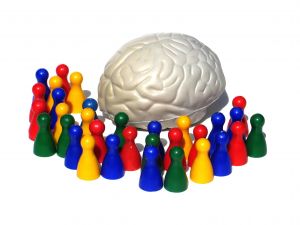
Neuroscience reveals five critical barriers to effective leadership: diminishing status, thoughtless rewards, reducing certainty, isolation, and unfairness. Understanding these leadership pitfalls can help leaders avoid demotivating their teams and create environments where people thrive.
12 top learning personality traits

Discover 12 learning personality types, from apprentices to saboteurs, each requiring distinct training approaches. Robin Hoyle outlines tailored strategies for developing different learners, including coaching techniques, feedback methods, and flexible e-learning options.